

Mobile Edge Computing is changing how we process data and interact with technology. Think about this. MEC can cut network latency down to under one millisecond, making instant decisions possible for things like self-driving cars and medical devices. Most people expect the cloud to handle everything, but moving computing power closer to users actually slashes delays and keeps sensitive data more secure. The secret is not just speed but how MEC transforms what’s possible in real time.
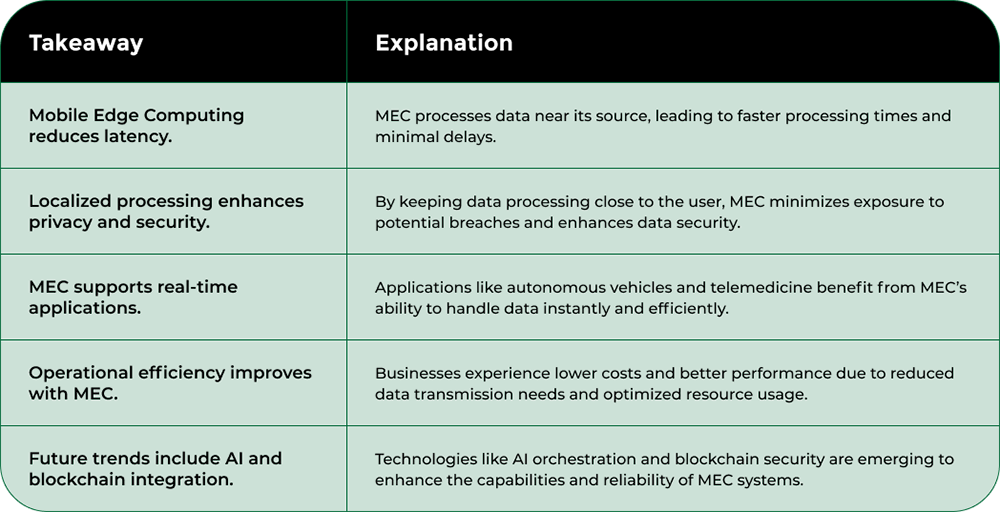
Mobile Edge Computing (MEC) represents a transformative approach to distributed computing that fundamentally reimagines how computational resources are deployed and managed. At its core, MEC shifts computational processing from centralized cloud data centers to the network’s edge, bringing computing capabilities closer to where data is generated and consumed.
Traditional cloud computing models require data to travel significant distances to centralized servers for processing, creating latency and potential bandwidth constraints.
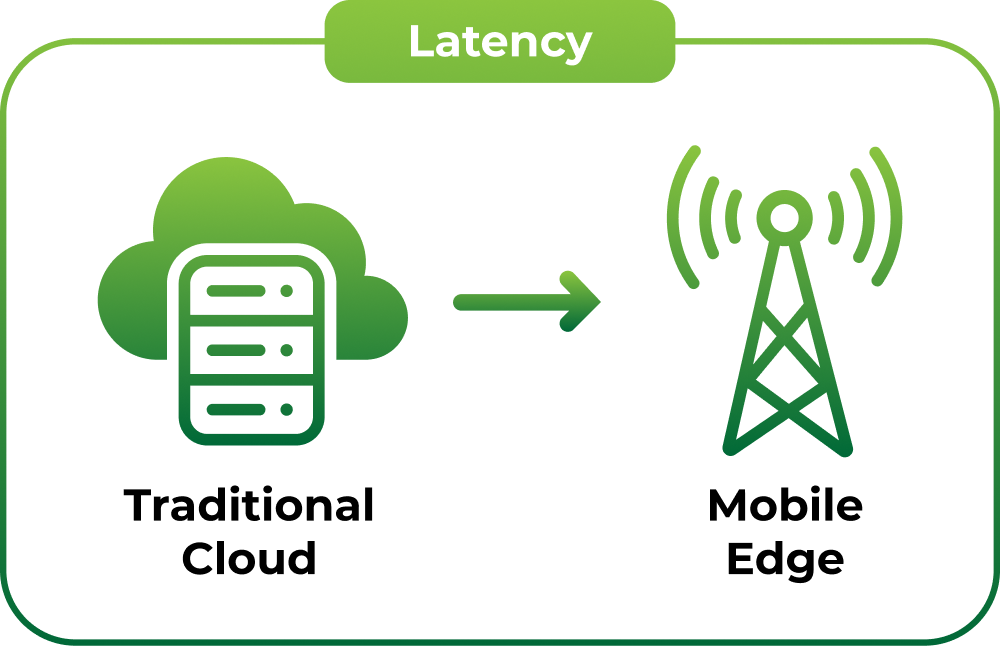
According to the IEEE Communications Society, MEC introduces a distributed computing environment that places computational resources directly within wireless access networks, enabling ultra-low latency and high-bandwidth processing.
Key characteristics of Mobile Edge Computing include:
The MEC architecture fundamentally restructures how computational tasks are managed.
By positioning computing resources near cell towers and base stations, MEC enables faster processing of data-intensive applications like IoT systems, autonomous vehicles, augmented reality, and machine-to-machine communications.
Research from the National Institute of Standards and Technology highlights that MEC addresses critical challenges in orchestrating heterogeneous computing nodes, particularly in dynamic and non-stationary network environments. This approach allows for more intelligent, responsive, and efficient computational workflows that adapt to real-time network conditions and user requirements.
Mobile Edge Computing represents more than a technological upgrade it signifies a paradigm shift in how we conceptualize and implement distributed computing infrastructure, prioritizing speed, efficiency, and localized processing capabilities.
Mobile Edge Computing (MEC) is not just a technological advancement but a strategic solution addressing critical performance and efficiency challenges faced by modern businesses and users across multiple industries. By fundamentally transforming data processing capabilities, MEC delivers tangible benefits that extend far beyond traditional computing paradigms.
According to IEEE Communications research, MEC provides businesses with unprecedented computational advantages. The technology enables organizations to dramatically reduce latency, optimize bandwidth utilization, and enhance overall system responsiveness. By processing data closer to its source, businesses can achieve near real-time performance for complex computational tasks.
Key operational benefits include:
For end-users, Mobile Edge Computing translates into more responsive and intelligent technological experiences. Applications requiring instantaneous processing such as autonomous vehicles, augmented reality, telemedicine, and industrial IoT systems become significantly more viable and effective through MEC’s distributed computing model.
Critical user-centric advantages encompass:
By bringing computational power closer to the point of data generation, Mobile Edge Computing represents a paradigm shift that empowers businesses to innovate faster, deliver superior user experiences, and unlock new technological possibilities across diverse domains.
Mobile Edge Computing (MEC) operates through a sophisticated network architecture that strategically distributes computational resources to maximize performance and efficiency. By reimagining traditional data processing models, MEC creates a dynamic, responsive computing environment that adapts to real-time technological demands.
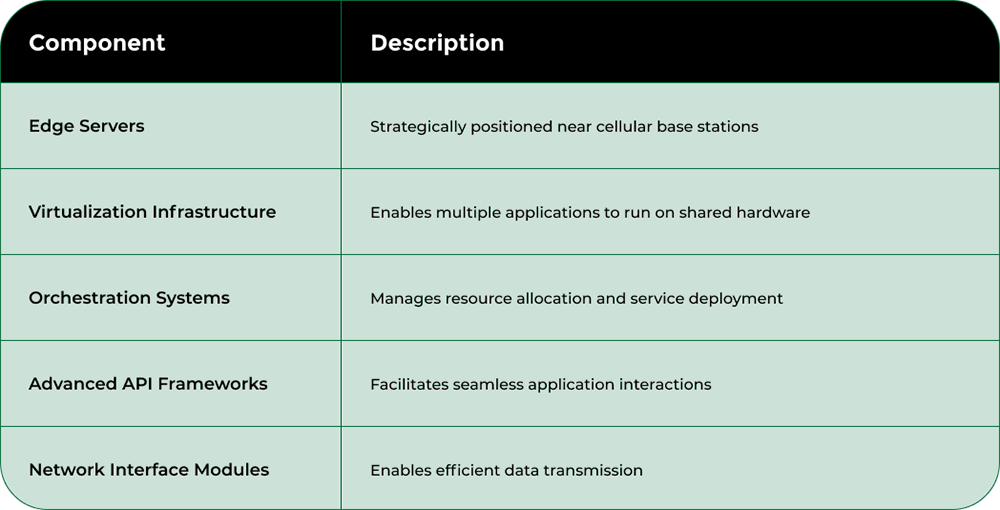
According to the European Telecommunications Standards Institute, MEC’s infrastructure comprises several critical elements that work synergistically to enable localized, high-performance computing. These components transform how data is processed, transmitted, and utilized across complex network environments.
Key architectural elements include:
The MEC workflow fundamentally differs from traditional cloud computing by processing data closer to its origin. When a mobile device or IoT sensor generates information, nearby edge servers can immediately analyze, filter, and respond to the data without routing it through distant centralized data centers.
This localized processing model delivers significant advantages:
By decentralizing computational resources and bringing processing capabilities directly to the network’s edge, Mobile Edge Computing creates a more intelligent, responsive, and efficient technological ecosystem that can adapt instantly to emerging computational requirements.
To enhance understanding of different MEC architecture elements, the following table summarizes the key components mentioned and their primary functions.
Mobile Edge Computing (MEC) is transforming multiple industries by enabling unprecedented computational capabilities at the network’s edge. Its versatility extends beyond theoretical potential, delivering tangible solutions across diverse technological domains that demand real-time processing and intelligent data management.
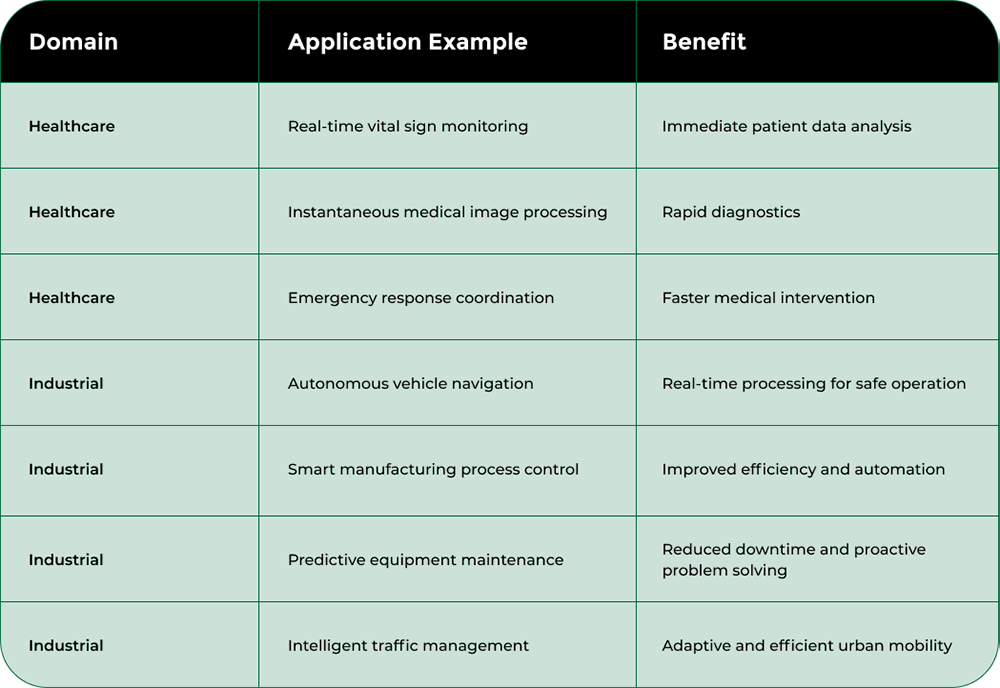
According to research from Harvard University’s Edge Computing Lab, MEC provides groundbreaking opportunities in healthcare technology. Wearable medical devices can now process critical patient data instantaneously, enabling remote monitoring, predictive diagnostics, and immediate health interventions without relying on distant cloud infrastructure.
Key healthcare applications include:
Industrial sectors are leveraging Mobile Edge Computing to revolutionize operational efficiency and automation. By processing data directly at the source, organizations can achieve unprecedented levels of precision, responsiveness, and intelligent decision making across complex technological ecosystems.
Critical industrial use cases encompass:
Mobile Edge Computing represents more than a technological advancement it is a transformative approach that enables intelligent, responsive, and efficient computing across multiple domains, fundamentally reshaping how we interact with technology and process information in real-time.
The following table organizes prominent real-world applications of Mobile Edge Computing, categorizing use cases in both healthcare and industrial sectors for quick reference.
Mobile Edge Computing (MEC) continues to evolve, presenting both significant technological challenges and exciting opportunities for future innovation. As the computing landscape becomes increasingly complex, researchers and industry experts are actively addressing critical limitations while exploring transformative potential.
According to IEEE Communications research, Mobile Edge Computing faces multifaceted challenges that require sophisticated solutions. Security and privacy remain paramount concerns, with complex distributed networks creating potential vulnerabilities that must be strategically mitigated.
Key technological challenges include:
The future of Mobile Edge Computing is characterized by convergence and intelligent integration. Emerging trends demonstrate a shift towards more adaptive, intelligent computing architectures that can dynamically respond to changing technological requirements.
Promising future development areas encompass:
As technological boundaries continue to expand, Mobile Edge Computing stands poised to revolutionize computational paradigms, offering unprecedented levels of efficiency, responsiveness, and intelligent data processing across multiple domains.
You have seen how the move to Mobile Edge Computing brings real-time data processing and ultra-low latency within reach, yet you might struggle when infrastructure bottlenecks, deployment complexity or inefficient hardware limit what you can achieve. If your team is dealing with challenges in sourcing high-performance GPU servers or scaling AI workloads as described in the article’s discussion of efficient resource management and latency reduction, there is a proven way forward.
Now is the time to level up your infrastructure and accelerate every edge computing project. Visit NodeStream by Blockware Solutions to explore verified, enterprise-ready HPC and AI marketplace solutions perfect for MEC and other data-intensive deployments. Discover fast transactions, trusted listings and comprehensive logistics for smooth scaling. Secure your edge. Advance your business. Start today with NodeStream and empower your Mobile Edge Computing journey from the ground up.
Mobile Edge Computing is a computing paradigm that shifts data processing from centralized cloud data centers to the edge of the network, closer to where data is generated, which enhances speed and reduces latency.
MEC enables businesses to achieve ultra-low latency, optimize bandwidth, enhance operational efficiency, and facilitate real-time data processing, leading to improved decision-making and reduced costs.
The key components of MEC architecture include edge servers, virtualization infrastructure, orchestration systems, advanced API frameworks, and network interface modules, all designed to optimize local data processing.
MEC is being utilized in various industries, including healthcare for real-time patient monitoring, smart infrastructure for intelligent traffic management, and industrial applications for enhancing operational efficiency and automation.
AI computing is quietly redrawing the boundaries of crypto, finance, and high-performance computing. Brace yourself. By…

Artificial intelligence is turbocharging the world of finance as never before, shaking up how both…

Digital transformation is about to completely reshape how we use crypto and artificial intelligence in…


